


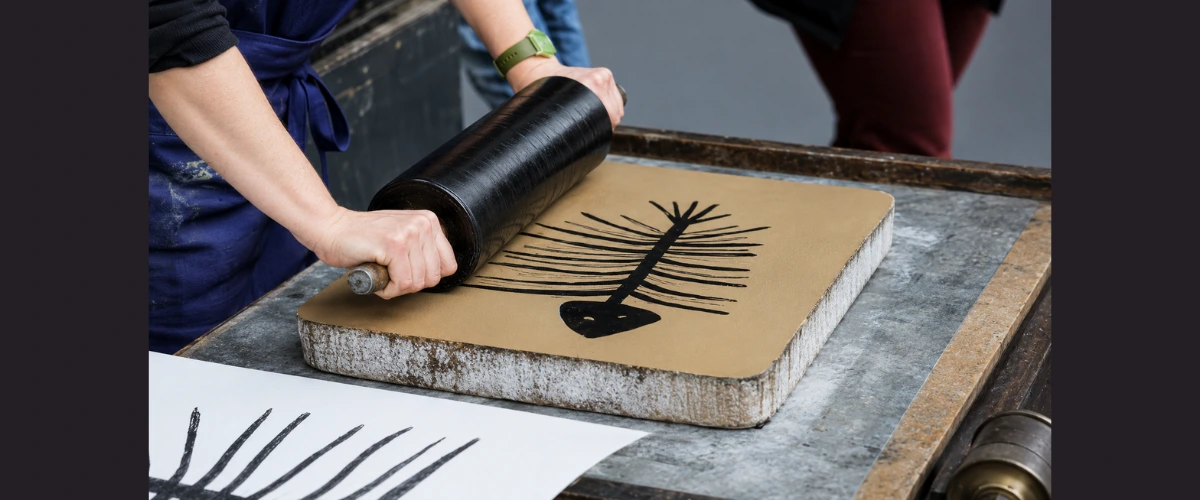
A simple experiment with a stone, grease, and water in 1798 created a printing technology that transformed art, publishing, packaging, and modern commercial printing.
Before digital presses, before automated workflows, and before high-speed offset machines, printing depended on one revolutionary discovery — lithography.
The invention began with a simple problem. In 1798, German inventor Alois Senefelder was searching for an affordable way to reproduce his written and musical works. During his experiments, he discovered something unexpected: oil and water naturally repel each other. This basic scientific principle became the foundation of a completely new printing method.
Instead of using raised or engraved surfaces like earlier printing techniques, lithography introduced a flat printing surface. A design created with a grease-based material on a limestone surface could attract ink, while the untreated areas absorbed water and rejected ink. This simple relationship between oil and water created a new era in image reproduction.
The Stone That Started a Revolution
The earliest lithography plates were made from Bavarian limestone. Artists and printers could draw directly on these stones, allowing them to reproduce detailed images and text with greater flexibility.
Unlike traditional methods that required carving or engraving, lithography made it easier to create multiple copies while preserving fine artistic details. This quickly attracted artists, publishers, and commercial printers.
From Art Studios to Mass Communication
During the 19th century, lithography became a powerful tool for spreading visual information. Posters, advertisements, maps, newspapers, and illustrations could now be produced more efficiently.
Artists such as Pablo Picasso, Henri Matisse, and Honoré Daumier explored lithography as a creative medium, while businesses used it to reach larger audiences through printed advertisements and promotional materials.
The introduction of colour lithography pushed the technology even further. Instead of creating images with a single tone, printers developed methods using multiple stones and colours layered together to produce detailed and vibrant artwork.
The Birth of Offset Printing
The biggest transformation came when lithography evolved into offset printing.
Instead of transferring ink directly from the plate to paper, offset printing introduced a rubber cylinder that received the image first and then transferred it onto the final surface. This innovation improved print quality, reduced wear on plates, and allowed printing on a wider range of materials.
The technology became the backbone of commercial printing, powering the production of books, magazines, packaging, labels, newspapers, and advertising materials worldwide.
Why Lithography Still Matters Today
Although modern printing has moved toward digital technologies, the principles of lithography continue to influence the industry. Offset printing, one of the most widely used printing methods today, still relies on the same fundamental idea discovered over two centuries ago.
Every magazine page, product package, and commercial print produced through offset technology carries a connection to that original discovery made with a simple stone and a scientific observation.
Alois Senefelder did not just invent a printing technique — he created a foundation that helped shape the modern world of communication.
From a limestone experiment to global printing systems, lithography remains one of the most important inventions in the history of print