


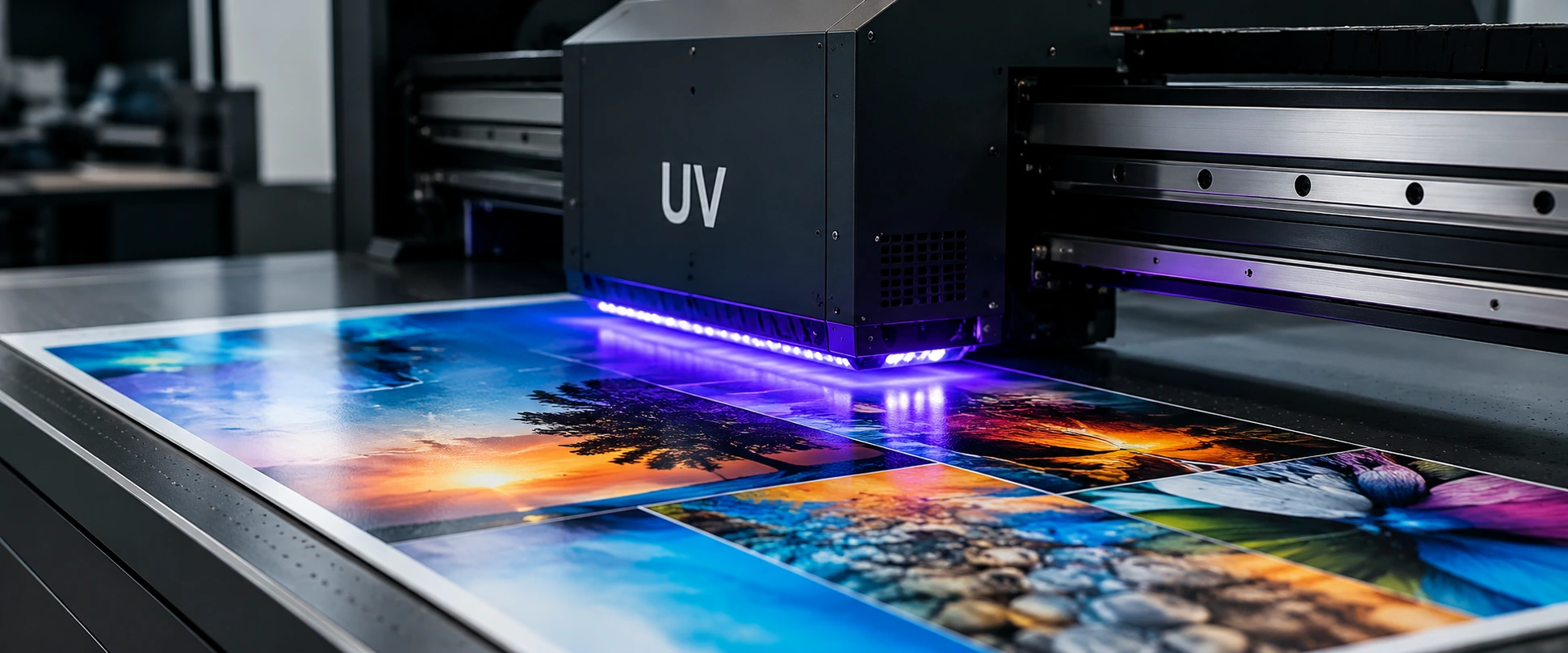
A drop of ink once needed time to dry. Today, it can transform into a durable printed layer in fractions of a second — changing the way industries print, package, and manufacture.
For centuries, printing followed a simple rule — ink was applied, then time was needed for it to dry. Whether on paper, books, newspapers, or packaging, the drying process was always a limitation. But modern printing introduced a technology that challenged this basic idea: ink that does not dry naturally, but cures instantly with light.
This innovation is known as UV printing, and it has quietly transformed the printing industry.
The Science Behind “Instant” Ink
Unlike traditional inks that dry through evaporation or absorption, UV-curable inks work through a chemical reaction. When ultraviolet light hits the printed ink, special components called photoinitiators activate and trigger polymerisation, turning the liquid ink into a solid layer almost instantly.
This means the printed surface can immediately move to the next production stage — cutting, folding, laminating, or packaging — without waiting for drying time.
A process that once slowed production became a technology designed for speed.
Why UV Printing Became a Game Changer
One of the biggest challenges in printing has always been the variety of materials that need decoration. Paper is easy to print on, but industries increasingly needed printing on plastics, glass, metal, films, and other non-porous surfaces.
UV technology changed that.
Because the ink cures on the surface rather than depending on absorption, printers can now create high-quality images on materials that were previously difficult to handle.
From beverage containers and product packaging to electronics and industrial components, UV printing opened new possibilities.
The Technology Behind Everyday Products
Many products people use daily involve UV printing technology without consumers realizing it.
Premium labels, packaging graphics, promotional displays, product branding, and industrial markings all rely on printing technologies that demand durability and precision.
A printed design is no longer just about appearance — it must survive scratches, chemicals, sunlight, moisture, and handling.
UV-cured inks provide this performance by forming a strong protective layer after curing.
From Large Machines to Smart Manufacturing
The rise of digital printing and automation has increased the importance of UV technology. Modern manufacturers need systems that support shorter production runs, customization, and faster delivery.
UV inkjet printing allows businesses to print directly onto products, reduce waiting time, and integrate printing into automated production lines.
This has made UV technology valuable not only for traditional printers but also for industries such as packaging, automotive, electronics, and manufacturing.
The Move Towards Sustainable Printing
As the printing industry focuses more on sustainability, UV technology continues to evolve. Energy-efficient UV LED curing systems are replacing older curing methods in many applications, helping reduce energy consumption and improve production efficiency.
At the same time, ink manufacturers are developing advanced formulations that deliver better performance while meeting environmental and regulatory requirements.
The Future Written in Light
The story of UV printing is not just about faster drying ink. It represents a larger shift in printing — from a process focused only on transferring images to a technology that supports manufacturing, branding, traceability, and innovation.
A technology that started with the challenge of drying ink has become one of the driving forces behind modern industrial printing.
The future of printing may not simply be about putting ink on a surface.
It may be about how intelligently that ink performs.