


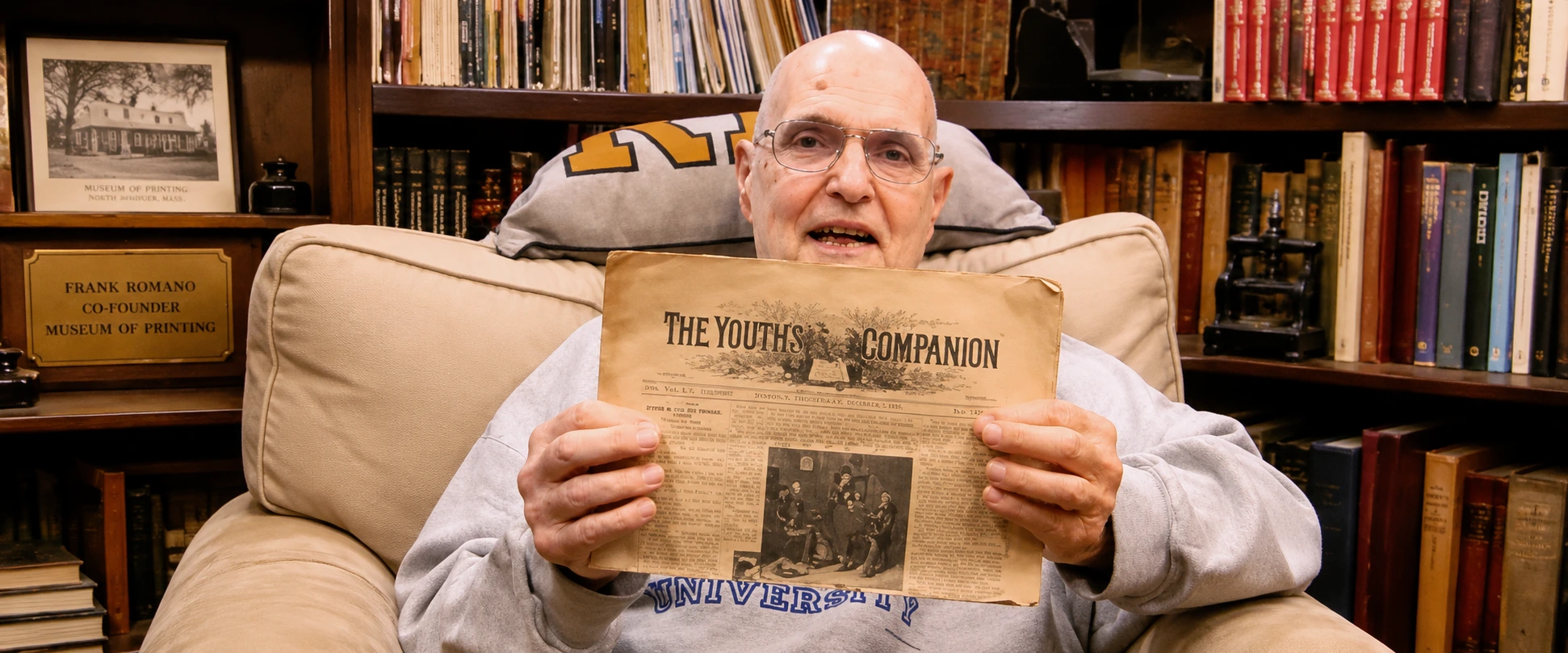
A pioneer, educator, author, and museum co-founder, Frank Romano’s contributions continue to shape the global printing and publishing industry.
Few individuals have left as profound an impact on the printing and publishing industry as Frank Romano. As he celebrates his 85th birthday, the industry is also marking another remarkable milestone—the upcoming publication of his 85th book, a testament to a lifetime dedicated to advancing print technology, education, and preservation.
Frank Romano’s journey into the printing world began unexpectedly in 1959 after graduating from high school in Brooklyn, New York. A career counselor directed him toward Mergenthaler Linotype, a decision that would shape the rest of his professional life. Starting in an entry-level position, Romano steadily expanded his knowledge of typography, printing, and publishing, eventually becoming one of the industry’s most respected voices.
Throughout a career spanning more than six decades, Romano has worn many hats—author, publisher, educator, historian, consultant, and industry advocate. He founded and led several influential industry publications, helping professionals stay informed during periods of significant technological transformation. His publishing ventures played an important role in documenting the transition from traditional typesetting to digital workflows.
One of Romano’s most extraordinary achievements is his extensive body of written work. To date, he has authored or co-authored 85 books covering topics such as typography, digital printing, publishing, graphic communications, and print history. Among his most recognized contributions is the Graphic Communications Encyclopedia, a comprehensive reference work that has become a valuable resource for industry professionals and students alike.
His upcoming 85th book, titled History of the Typesetting Service, continues his commitment to preserving the rich heritage of print and documenting the technologies that shaped modern communications.
Beyond publishing, Romano has played a pivotal role in education. He served as a professor and later Director of the School of Print Media at the Rochester Institute of Technology (RIT), where he influenced generations of print professionals. His teaching and mentorship have helped countless students build successful careers across the printing and graphic communications sectors.
Romano has also been deeply committed to supporting future talent. Over the years, he has quietly provided thousands of scholarships to students pursuing education in printing and graphic communications, helping strengthen the industry’s next generation.
Perhaps one of his most enduring legacies is his role as co-founder of the Museum of Printing in Haverhill, Massachusetts. The museum houses an extensive collection of printing equipment, historical artifacts, rare books, type specimens, and educational exhibits that preserve the history of print for future generations. Romano’s personal contributions, including his vast library and support for the museum’s facilities, have been instrumental in establishing it as one of the world’s most significant printing heritage institutions.
His expertise has also been sought in several high-profile projects and legal cases involving typography and document analysis. Over the years, Romano has advised government agencies, major technology companies, and industry organizations on matters relating to print technology and type design.
Among his many notable contributions was assisting in the early development of desktop publishing technologies and helping shape discussions around digital printing standards. His influence extends far beyond North America, with lectures and presentations delivered across Europe, Asia, Australia, the Middle East, and Latin America.
Today, Frank Romano remains one of the printing industry’s most respected ambassadors. His dedication to education, innovation, and historical preservation continues to inspire professionals worldwide.
As the industry celebrates his 85th birthday and the publication of his 85th book, Frank Romano’s remarkable career stands as a powerful reminder of the lasting impact one individual can have on the evolution of print.