


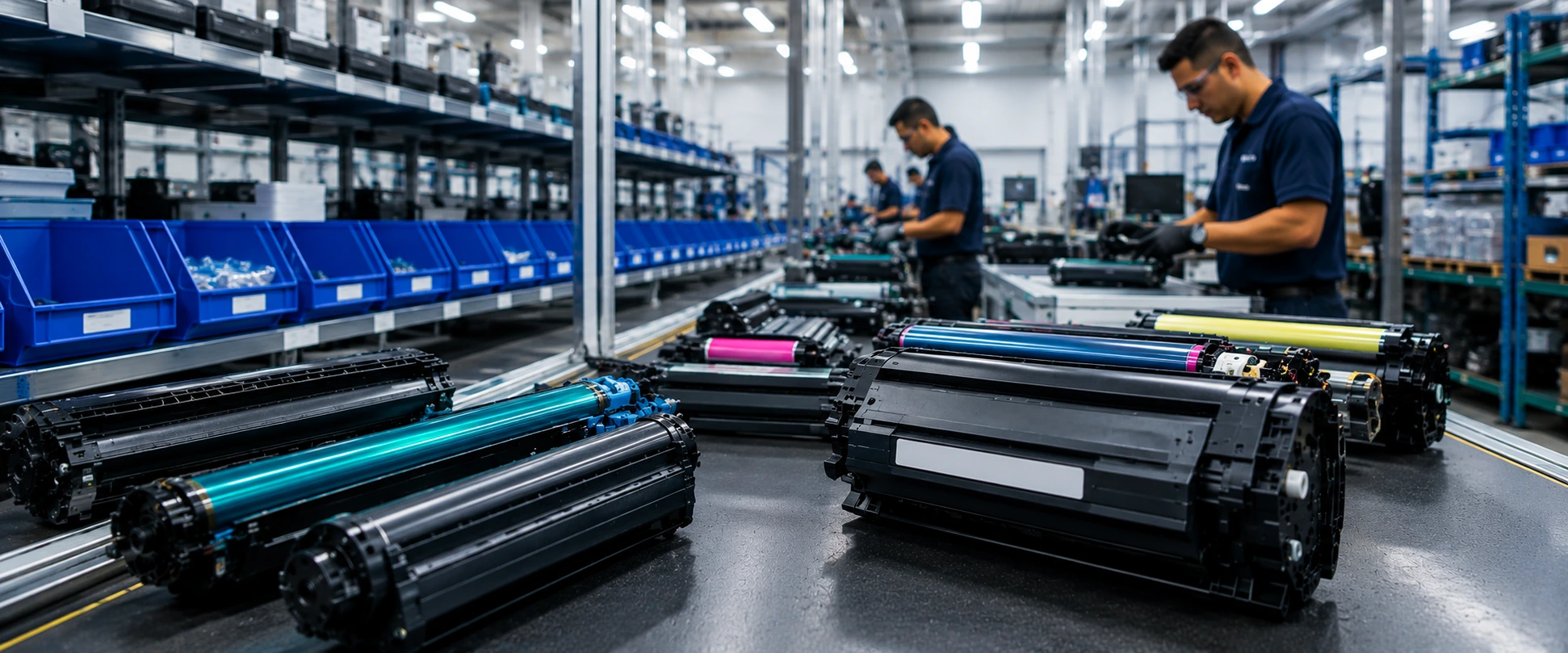
Rising imports and overseas production have reshaped the market, prompting renewed focus on sustainability, domestic manufacturing, and supply chain resilience.
The U.S. printer cartridge remanufacturing industry, once recognized as a model of sustainable manufacturing and circular economy practices, has undergone significant changes over the past two decades as imported alternatives gained market share and altered the competitive landscape.
Originally established during the 1980s, the remanufacturing sector emerged as an environmentally responsible solution to the growing volume of discarded ink and toner cartridges generated by leading printer manufacturers. By refurbishing and reusing spent cartridges, remanufacturers helped reduce landfill waste while offering businesses and consumers a cost-effective printing alternative.
The industry experienced rapid growth throughout the 1990s and early 2000s, developing into a multi-billion-dollar global market. At its peak, the sector supported thousands of businesses, including remanufacturers, distributors, component suppliers, equipment manufacturers, and service providers.
Industry development was further supported by organizations and events dedicated to the print consumables market. Trade publications and international exhibitions helped create a thriving ecosystem that encouraged innovation, collaboration, and business growth across the sector.
However, the market began to evolve in the early 2000s as overseas manufacturers expanded their presence in the United States. The availability of lower-cost compatible cartridges and growing international production capabilities gradually shifted industry dynamics. Over time, imported products captured an increasing share of the market, resulting in a significant redistribution of manufacturing activity beyond U.S. borders.
As competition intensified, many companies operating across the remanufacturing value chain scaled back operations or exited the market altogether. The impact extended to businesses involved in cartridge refurbishment, component manufacturing, tooling, distribution, and related support services.
Despite these challenges, industry experts believe remanufacturing continues to offer important economic and environmental benefits. The sector remains relevant as organizations seek sustainable printing solutions that can help reduce waste while lowering operating costs.
According to industry leaders, growing interest in domestic manufacturing, supply chain resilience, and environmental responsibility could create new opportunities for the sector. The ability to reuse existing materials not only supports waste reduction efforts but also decreases the demand for raw materials and energy required for manufacturing new cartridges.
As governments and businesses increasingly evaluate strategies to strengthen local production capabilities, the printer cartridge remanufacturing industry is being viewed as a potential contributor to broader sustainability and onshoring initiatives. Supporters argue that increased adoption of remanufactured cartridges can help reduce environmental impact while supporting domestic employment and manufacturing capacity.
The ongoing transformation of the industry reflects wider changes taking place across global supply chains. As organizations continue to balance cost efficiency, sustainability goals, and supply chain security, remanufactured printer cartridges remain a practical option that aligns environmental and economic priorities.
With renewed attention on circular economy principles and domestic manufacturing, industry stakeholders believe the sector could play an important role in the future of sustainable printing and resource conservation.