


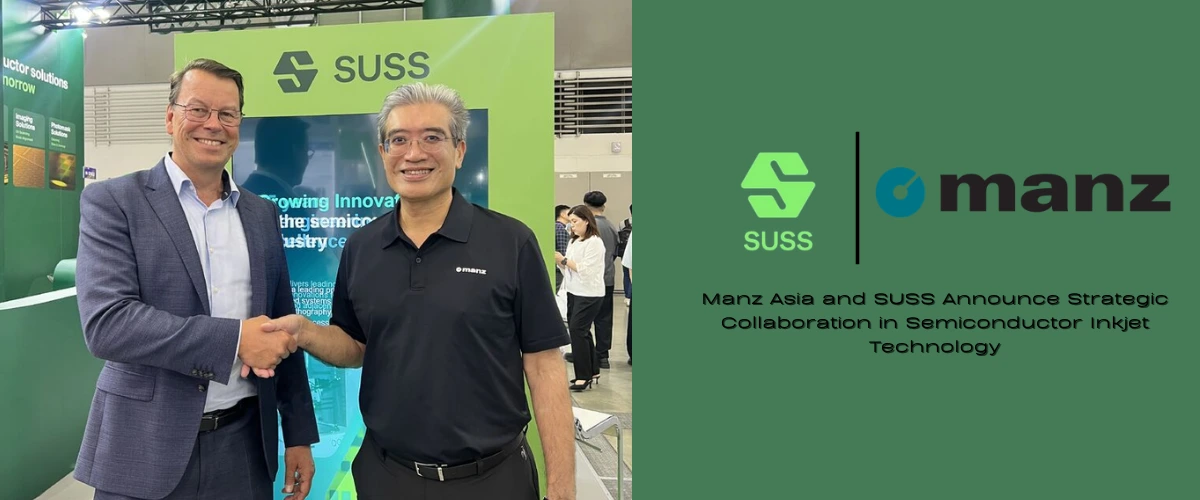
SUSS MicroTec SE and Manz Asia partner to accelerate next-generation inkjet solutions for advanced semiconductor packaging and manufacturing
SUSS (MDAX/TecDAX: SMHN), a leading manufacturer of equipment and process solutions for the semiconductor industry, today announced a strategic collaboration with Manz Asia to jointly develop next-generation inkjet solutions for semiconductor manufacturing and advanced packaging applications.
The collaboration combines two highly complementary technology portfolios. SUSS contributes its deep expertise in semiconductor process equipment and advanced packaging, while Manz Asia adds proven inkjet capabilities and a strong position within the emerging panel-level packaging ecosystem. By combining engineering know-how, application expertise and market access, the two companies aim to accelerate technology development, shorten time-to-market for future inkjet solutions and address evolving customer requirements in advanced packaging and semiconductor manufacturing.
Inkjet technology is a key pillar of SUSS’ long-term growth strategy and is expected to become an increasingly important element of the company’s coating business. According to market assessments, the annual serviceable equipment market for semiconductor inkjet applications is expected to exceed USD 800 million by 2030. The collaboration strengthens SUSS’ ability to participate in this emerging market and expand its inkjet technology portfolio in next-generation coating applications.
Compared with conventional coating technologies, inkjet offers several advantages, including significant material savings, improved cost efficiency and highly uniform deposition on complex three-dimensional structures. These benefits are driving increasing interest in advanced packaging, high-value materials processing and future manufacturing concepts based on additive process technologies.
An additional strategic benefit of the collaboration is accelerated access to the emerging panel-level packaging ecosystem. Panel-level packaging is expected to play an increasingly important role in next-generation semiconductor manufacturing, driven by requirements for higher throughput, improved cost efficiency and growing package complexity. Leveraging Manz Asia’s established market position and expertise, SUSS further strengthens its ability to address this attractive long-term opportunity and expand its technology leadership in advanced packaging.
“Panel-level packaging is entering a new phase, driven by higher integration and increasingly complex structures. These developments are creating new demands for greater process flexibility, material efficiency and manufacturing scalability. Through our collaboration with SUSS, Manz Asia is combining its inkjet printing and manufacturing expertise with SUSS’ semiconductor process capabilities and global customer reach. Together, we see strong potential to accelerate the transition of inkjet technology from advanced process development to high-volume semiconductor manufacturing. This collaboration marks an important step towards delivering scalable, next-generation solutions for advanced packaging and future semiconductor applications,” says Robert Lin, CEO of Manz Asia.
Burkhardt Frick, CEO of SUSS adds: “Successfully commercializing new semiconductor technologies requires deep process expertise, strong application know-how and close alignment with customer roadmaps. By combining SUSS’ semiconductor process experience with Manz Asia’s inkjet expertise, we can accelerate technology development and reduce time-to-market for future solutions. At the same time, the collaboration strengthens our access to the emerging panel-level packaging ecosystem, an area we believe will play an increasingly important role in next-generation semiconductor manufacturing. This partnership supports our Ambition 2030 strategy by strengthening our technology portfolio, expanding our capabilities in advanced packaging and increasing our exposure to attractive semiconductor growth markets.”