


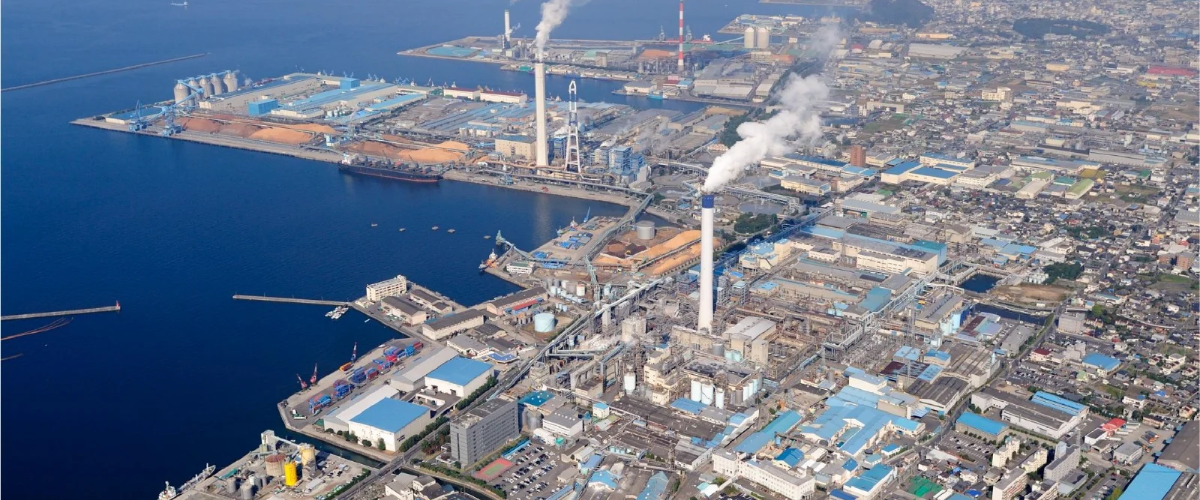
Nippon Paper’s Yatsushiro mill closure will remove 211,000 tonnes of annual graphic-paper capacity, potentially reshaping Japan’s paper supply, sourcing patterns and regional trade.
Earthquake damage turns a temporary production stoppage into a permanent restructuring decision, raising questions over domestic supply, grade availability, trade flows and the future direction of Japan’s paper industry.
Yatsushiro: From Disaster Recovery to Structural Restructuring
The decision by Nippon Paper Industries to permanently terminate graphic paper and pulp production at its Yatsushiro Mill in Kumamoto Prefecture marks a significant development in Japan’s paper manufacturing landscape. Following severe damage caused by the July 2026 earthquake, the company has decided not to restart three paper machines with a combined annual capacity of 211,000 tonnes.
The decision is not merely the closure of damaged production facilities. It represents the intersection of natural disaster, declining graphic paper demand, rising capital-reconstruction costs and a broader restructuring of the paper industry—an industry already navigating changing consumption patterns, digitalisation and shifting international trade dynamics.
The central question now is whether the removal of this capacity will create meaningful supply pressure in Japan, alter import and export flows, or simply accelerate the consolidation of a market that has been undergoing structural change for years.
Machine Capacity Affected
| Paper machine | Annual capacity | Principal grades |
| No. 4 | 35,000 tonnes | Fine paper |
| No. 6 | 66,000 tonnes | Fine paper, PPC paper |
| N1 | 110,000 tonnes | Newsprint, PPC paper |
| Total | 211,000 tonnes | Graphic paper |
In addition to the paper machines, pulp production at the mill will also cease. The reported 211,000-tonne figure represents the combined paper-machine capacity and does not include additional pulp capacity.
The company intends to transfer production of selected grades to other mills, arrange contract manufacturing for certain products, and discontinue some products where necessary. Consequently, the full 211,000 tonnes should not be interpreted as an equivalent volume of paper disappearing from the market immediately.
What Does This Mean for Japan’s Domestic Paper Market?
Japan’s paper industry has been experiencing a long-term adjustment as demand for traditional graphic papers faces pressure from digital communication, electronic media, changing publishing patterns and reduced consumption of certain print categories. The Yatsushiro shutdown adds another chapter to this structural transformation.
However, its impact on the domestic market will depend less on the headline capacity figure and more on how successfully Nippon Paper reallocates production across its remaining manufacturing network.
Fine Paper and PPC Supply
The shutdown affects fine paper and PPC grades manufactured on the No. 4 and No. 6 machines. If production transfers to other mills are successful, the immediate effect on Japan’s overall supply may be limited. Nevertheless, the transition could create short-term challenges involving grade-specific availability, production scheduling, customer qualification and technical approvals, lead times, inventory planning, distribution and logistics.
The possibility of discontinuing selected products is particularly significant. Even when total domestic paper supply remains sufficient, the disappearance of particular grades, specifications or product variants can create shortages for individual printers and buyers.
Earthquake damage turns a temporary production stoppage into a permanent restructuring decision, raising questions over domestic supply, grade availability, trade flows and the future direction of Japan’s paper industry.
Yatsushiro: From Disaster Recovery to Structural Restructuring
The decision by Nippon Paper Industries to permanently terminate graphic paper and pulp production at its Yatsushiro Mill in Kumamoto Prefecture marks a significant development in Japan’s paper manufacturing landscape. Following severe damage caused by the July 2026 earthquake, the company has decided not to restart three paper machines with a combined annual capacity of 211,000 tonnes.
The decision is not merely the closure of damaged production facilities. It represents the intersection of natural disaster, declining graphic paper demand, rising capital-reconstruction costs and a broader restructuring of the paper industry—an industry already navigating changing consumption patterns, digitalisation and shifting international trade dynamics.
The central question now is whether the removal of this capacity will create meaningful supply pressure in Japan, alter import and export flows, or simply accelerate the consolidation of a market that has been undergoing structural change for years.
Machine Capacity Affected
| Paper machine | Annual capacity | Principal grades |
| No. 4 | 35,000 tonnes | Fine paper |
| No. 6 | 66,000 tonnes | Fine paper, PPC paper |
| N1 | 110,000 tonnes | Newsprint, PPC paper |
| Total | 211,000 tonnes | Graphic paper |
In addition to the paper machines, pulp production at the mill will also cease. The reported 211,000-tonne figure represents the combined paper-machine capacity and does not include additional pulp capacity.
The company intends to transfer production of selected grades to other mills, arrange contract manufacturing for certain products, and discontinue some products where necessary. Consequently, the full 211,000 tonnes should not be interpreted as an equivalent volume of paper disappearing from the market immediately.
What Does This Mean for Japan’s Domestic Paper Market?
Japan’s paper industry has been experiencing a long-term adjustment as demand for traditional graphic papers faces pressure from digital communication, electronic media, changing publishing patterns and reduced consumption of certain print categories. The Yatsushiro shutdown adds another chapter to this structural transformation.
However, its impact on the domestic market will depend less on the headline capacity figure and more on how successfully Nippon Paper reallocates production across its remaining manufacturing network.
Fine Paper and PPC Supply
The shutdown affects fine paper and PPC grades manufactured on the No. 4 and No. 6 machines. If production transfers to other mills are successful, the immediate effect on Japan’s overall supply may be limited. Nevertheless, the transition could create short-term challenges involving grade-specific availability, production scheduling, customer qualification and technical approvals, lead times, inventory planning, distribution and logistics.
The possibility of discontinuing selected products is particularly significant. Even when total domestic paper supply remains sufficient, the disappearance of particular grades, specifications or product variants can create shortages for individual printers and buyers.
industry operates at a much larger scale, and graphic-paper demand continues to face structural challenges in several mature markets. Capacity reductions, mill conversions and closures have become part of the industry’s adjustment process.
The Yatsushiro shutdown could nevertheless influence certain regional markets and individual grades.
| Market factor | Potential impact |
| Fine paper availability | Possible regional supply adjustment for selected grades |
| PPC paper | Alternative sourcing opportunities for distributors and buyers |
| Newsprint | Further consolidation in a structurally declining segment |
| Asian paper exporters | Potential opportunities to serve displaced demand |
| Pulp market | Limited direct impact expected from this paper-machine closure alone |
| Paper pricing | Grade-specific or regional adjustments rather than broad global movement |
| Freight and logistics | Potential changes in sourcing routes and delivered costs |
The most likely outcome is not a global paper shortage but a redistribution of supply opportunities among manufacturers and trading regions.
The Tissue Business Question: A Strategic Opportunity Put on Hold
One of the most important aspects of the Yatsushiro development extends beyond graphic paper. Nippon Paper had previously announced plans to develop a household paper business at Yatsushiro, with production expected to begin in 2027. The project was intended to utilise the mill’s resources to enter or expand the daily-life products segment, primarily targeting export markets.
The planned product category included household tissue products, representing a strategic shift towards consumer-oriented paper businesses. However, following the earthquake damage, the company has now placed the tissue project on hold and is reassessing its commercial viability and future implementation.
This development is significant because tissue has generally offered paper manufacturers an opportunity to diversify away from declining graphic-paper segments. Unlike newsprint and traditional printing papers, tissue products are linked more closely to everyday consumption, hygiene, household use and institutional demand.
The Yatsushiro development is therefore a double-sided story: the exit of graphic-paper capacity and the temporary uncertainty surrounding a planned tissue expansion.
Pulp Market Implications: More Complex Than a Capacity Closure
The termination of pulp production at Yatsushiro adds another dimension to the restructuring. However, assessing its impact on the pulp market requires caution. The announcement confirms the termination of pulp production but does not provide a separate pulp capacity figure that can be added to the 211,000-tonne paper-machine capacity.
The effect on pulp procurement and market availability will depend on the mill’s previous pulp output, the company’s internal consumption, sourcing arrangements at its other facilities and whether replacement pulp production is undertaken elsewhere. Its greater significance may lie in the company’s broader manufacturing restructuring and its impact on Japan’s domestic fibre and paper supply chain.
The Bigger Picture: Japan’s Paper Industry Is Repositioning
The Yatsushiro decision reflects a larger question facing Japan’s paper industry: how should manufacturers allocate capital in an era of declining traditional paper demand and changing product consumption? The industry is under pressure to reconsider its manufacturing footprint, particularly in graphic-paper segments affected by digitalisation and changing communication habits.
Mill consolidation, machine shutdowns, production transfers, asset optimisation and diversification into packaging, tissue, specialty papers and other value-added products are increasingly becoming strategic considerations. For established manufacturers, the objective is not necessarily to preserve every existing production line. It is to build a manufacturing network that can remain competitive, generate sustainable returns and respond to evolving customer requirements.
industry operates at a much larger scale, and graphic-paper demand continues to face structural challenges in several mature markets. Capacity reductions, mill conversions and closures have become part of the industry’s adjustment process.
The Yatsushiro shutdown could nevertheless influence certain regional markets and individual grades.
| Market factor | Potential impact |
| Fine paper availability | Possible regional supply adjustment for selected grades |
| PPC paper | Alternative sourcing opportunities for distributors and buyers |
| Newsprint | Further consolidation in a structurally declining segment |
| Asian paper exporters | Potential opportunities to serve displaced demand |
| Pulp market | Limited direct impact expected from this paper-machine closure alone |
| Paper pricing | Grade-specific or regional adjustments rather than broad global movement |
| Freight and logistics | Potential changes in sourcing routes and delivered costs |
The most likely outcome is not a global paper shortage but a redistribution of supply opportunities among manufacturers and trading regions.
The Tissue Business Question: A Strategic Opportunity Put on Hold
One of the most important aspects of the Yatsushiro development extends beyond graphic paper. Nippon Paper had previously announced plans to develop a household paper business at Yatsushiro, with production expected to begin in 2027. The project was intended to utilise the mill’s resources to enter or expand the daily-life products segment, primarily targeting export markets.
The planned product category included household tissue products, representing a strategic shift towards consumer-oriented paper businesses. However, following the earthquake damage, the company has now placed the tissue project on hold and is reassessing its commercial viability and future implementation.
This development is significant because tissue has generally offered paper manufacturers an opportunity to diversify away from declining graphic-paper segments. Unlike newsprint and traditional printing papers, tissue products are linked more closely to everyday consumption, hygiene, household use and institutional demand.
The Yatsushiro development is therefore a double-sided story: the exit of graphic-paper capacity and the temporary uncertainty surrounding a planned tissue expansion.
Pulp Market Implications: More Complex Than a Capacity Closure
The termination of pulp production at Yatsushiro adds another dimension to the restructuring. However, assessing its impact on the pulp market requires caution. The announcement confirms the termination of pulp production but does not provide a separate pulp capacity figure that can be added to the 211,000-tonne paper-machine capacity.
The effect on pulp procurement and market availability will depend on the mill’s previous pulp output, the company’s internal consumption, sourcing arrangements at its other facilities and whether replacement pulp production is undertaken elsewhere. Its greater significance may lie in the company’s broader manufacturing restructuring and its impact on Japan’s domestic fibre and paper supply chain.
The Bigger Picture: Japan’s Paper Industry Is Repositioning
The Yatsushiro decision reflects a larger question facing Japan’s paper industry: how should manufacturers allocate capital in an era of declining traditional paper demand and changing product consumption? The industry is under pressure to reconsider its manufacturing footprint, particularly in graphic-paper segments affected by digitalisation and changing communication habits.
Mill consolidation, machine shutdowns, production transfers, asset optimisation and diversification into packaging, tissue, specialty papers and other value-added products are increasingly becoming strategic considerations. For established manufacturers, the objective is not necessarily to preserve every existing production line. It is to build a manufacturing network that can remain competitive, generate sustainable returns and respond to evolving customer requirements.
Editorial Note
The 211,000-tonne figure refers to the combined rated annual capacity of the three affected paper machines, not confirmed production lost from the Japanese market. Market, import/export and global impact analysis distinguishes confirmed company actions from possible industry consequences.