


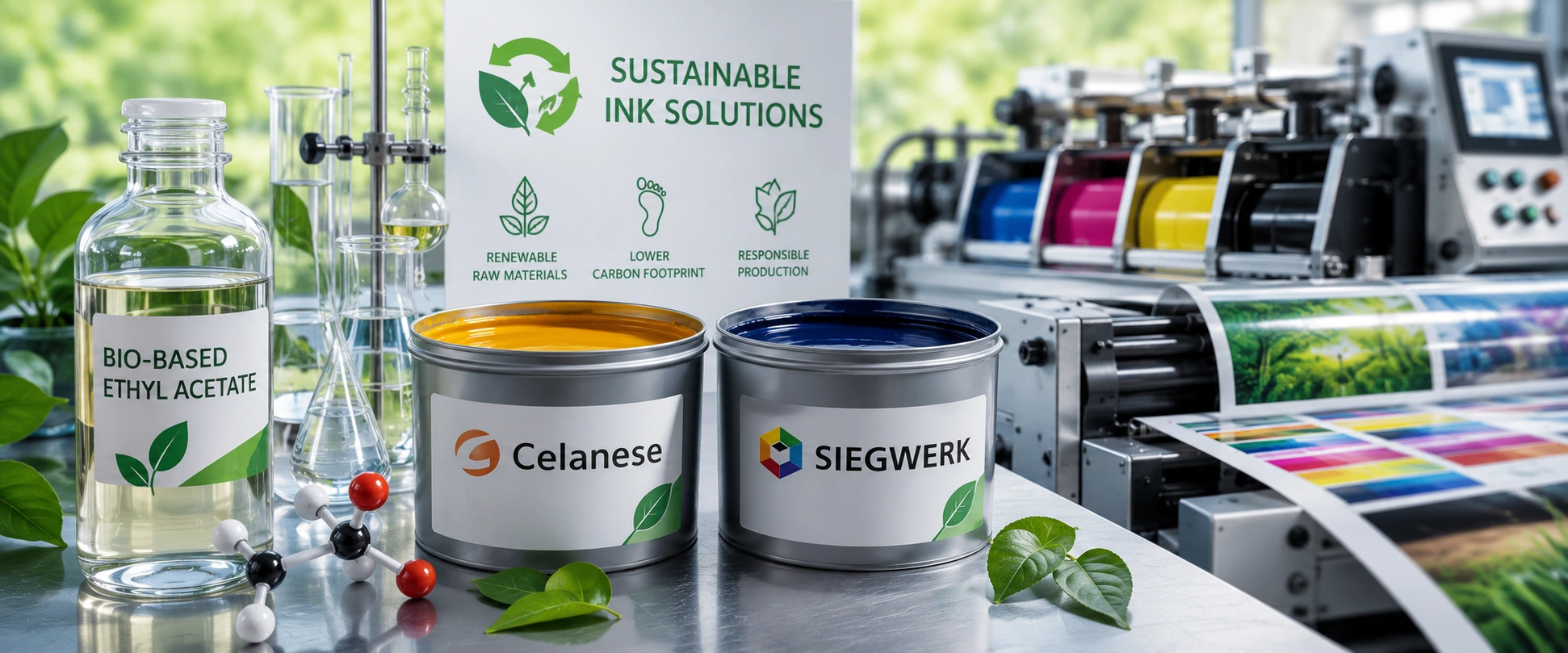
Partnership aims to reduce dependence on fossil-based raw materials while supporting more sustainable printing ink formulations.
Celanese and Siegwerk have announced a strategic collaboration to promote sustainability in the printing ink value chain through the use of bio-based ethyl acetate. The initiative is designed to help reduce reliance on fossil-derived raw materials while maintaining the performance standards required for modern printing applications.
Under the partnership, Celanese will supply bio-based ethyl acetate containing 50% bio-based content, offering a more sustainable alternative to conventional solvent solutions. Siegwerk will incorporate the material into its existing ink formulations as a drop-in solution, allowing adoption without requiring changes to manufacturing processes or compromising product performance.
The collaboration reflects the growing focus on sustainability across the printing and packaging industries, where manufacturers are increasingly seeking renewable raw materials to reduce environmental impact while maintaining production efficiency. By utilizing bio-based ethyl acetate, both companies aim to contribute to lower fossil resource consumption and support the industry’s transition toward greener production practices.
Siegwerk noted that the initiative aligns with its long-term sustainability objectives, including its SustainUP procurement program and HorizonNOW 2030 strategy, both of which emphasize the responsible use of renewable feedstocks and sustainable sourcing throughout the supply chain.
For Celanese, the partnership highlights the importance of collaboration in developing scalable sustainability solutions. The company believes that bio-based materials can play a significant role in helping manufacturers reduce their environmental footprint while continuing to meet the demanding performance requirements of packaging and printing applications.
Ethyl acetate is widely used in printing inks as a solvent, particularly in packaging printing applications, where it helps control viscosity, resin dissolution, and drying performance. The introduction of a bio-based alternative provides printers and ink manufacturers with an opportunity to improve sustainability without disrupting established production workflows.
As sustainability continues to shape investment and product development decisions across the print industry, collaborations such as this demonstrate how material suppliers and ink manufacturers can work together to develop practical solutions that support environmental goals while maintaining operational efficiency and print quality.